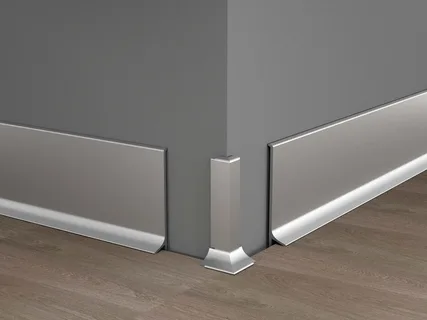
Modern interiors are increasingly defined by restraint rather than excess. Clean lines, precise junctions, and visual continuity now matter more than ornamental detailing. In this design environment, even transitional elements like skirting play a decisive role in how refined a space ultimately feels.
As architectural preferences shift toward minimalism and long-term durability, materials are being evaluated not only for appearance but also for performance. Metal skirting has emerged as a solution that aligns with contemporary construction standards, especially where hygiene, longevity, and clean detailing are non-negotiable. Toward the end of this evolving discussion, Aluminium skirting profiles stand out as a systemized approach to interior finishing rather than a decorative afterthought.
The Shift From Decorative to Architectural Skirting
Skirting boards were once selected primarily to mask imperfections where walls meet floors. Traditional materials served this purpose but rarely contributed to the architectural language of a space. Today, skirting is viewed as an intentional design component rather than a concealment tool.
Metal skirting aligns with this shift by offering crisp edges and uniform profiles. It complements modern flooring materials such as large-format tiles, polished concrete, and engineered wood. This transition reflects a broader architectural mindset that favors precision over embellishment, particularly in commercial and high-end residential projects.
Material Integrity in Modern Interior Construction
Material selection is now closely tied to lifecycle performance. Architects and developers seek materials that maintain form and finish under daily wear. Metal skirting responds well to these expectations due to its resistance to warping, swelling, and surface degradation.
Unlike timber-based options, metal does not react unpredictably to humidity or temperature changes. This stability is particularly relevant in Indian construction environments where climatic variations are significant. As a result, metal skirting integrates smoothly into long-term interior planning without recurring maintenance concerns.
Dimensional Stability and Alignment
Dimensional accuracy is essential when working with tight tolerances. Metal skirting maintains consistent thickness and straightness across lengths. This allows installers to achieve precise wall alignments without corrective adjustments.
Consistent geometry also supports seamless integration with modern wall finishes. Clean junctions reduce visual noise, reinforcing the minimal design intent across interior spaces.
Compatibility With Contemporary Flooring
Modern flooring systems often demand flush transitions. Metal skirting supports this requirement by aligning closely with floor edges without overlapping or bulging. This results in a streamlined visual break between surfaces.
Such compatibility is especially valuable in spaces using thin tiles or continuous flooring finishes. The skirting becomes an extension of the floor system rather than an external add-on.
Reduced Dependence on Surface Treatments
Metal skirting typically requires fewer surface coatings compared to wood-based alternatives. Finishes are factory-controlled, ensuring consistency across batches. This minimizes on-site finishing work and reduces variability in final appearance.
The result is a cleaner installation process with predictable outcomes, which is increasingly preferred in structured construction workflows.
Hygiene and Maintenance Considerations
Cleanability has become a central concern in both residential and commercial interiors. Skirting, positioned at floor level, is particularly vulnerable to dust accumulation and moisture exposure. Metal surfaces address these concerns more effectively than porous materials.
Smooth, non-absorbent surfaces discourage microbial buildup and simplify cleaning routines. This makes metal skirting suitable for environments such as hospitals, kitchens, offices, and retail spaces where hygiene standards are critical.
Fire and Safety Performance
Safety regulations increasingly influence material choices. Metal skirting contributes positively by offering non-combustible properties. Unlike polymer or wood-based materials, it does not contribute to fire load.
This characteristic aligns with modern building codes and risk mitigation strategies. While skirting may seem minor, its material composition still plays a role in overall interior safety planning.
Non-Combustible Material Advantage
Metal does not ignite or propagate flames. In the event of fire exposure, it retains structural integrity longer than organic materials. This characteristic adds a passive safety layer to interior assemblies. Such performance is particularly relevant in commercial and high-density residential developments.
Structural Consistency Under Stress
Beyond fire scenarios, metal skirting resists cracking and deformation under physical stress. This ensures that safety-related pathways, such as corridors and exits, maintain consistent detailing over time. Structural reliability at the micro level contributes to macro safety outcomes in building design.
Compliance With Modern Building Norms
Metal-based interior components often align more easily with regulatory expectations. Their documented performance characteristics simplify specification and approval processes. This reduces ambiguity during project planning and execution phases.
Long-Term Cost Efficiency
While initial material costs may appear higher, metal skirting often proves economical over the building lifecycle. Reduced maintenance, fewer replacements, and consistent appearance contribute to overall value. This cost logic appeals to developers focused on durability and predictable asset performance rather than short-term savings.
Architectural Consistency Across Spaces
Consistency is a hallmark of refined interiors. Metal skirting supports uniform detailing across rooms and zones. This is particularly useful in large projects where visual continuity enhances perceived quality.
Uniform skirting profiles create a cohesive narrative from private to shared spaces, reinforcing architectural intent.
Seamless Transitions Between Zones
Metal skirting adapts well to varied interior functions without visual disruption. Whether transitioning from lobby to corridor or living area to utility space, continuity is preserved. This reinforces spatial flow and reduces visual fragmentation.
Neutral Aesthetic Integration
Metal finishes tend to be understated, allowing walls and floors to remain the primary visual elements. The skirting performs its role quietly without competing for attention. Such neutrality aligns with modern interior philosophies that prioritize balance.
Longevity of Design Intent
Design trends evolve, but fundamental architectural clarity remains relevant. Metal skirting supports enduring design principles rather than transient stylistic choices. This ensures interiors remain visually relevant for longer periods.
Final Thoughts on Modern Skirting Solutions
Modern interiors demand materials that deliver clarity, durability, and precision simultaneously. Metal skirting fulfills these expectations by addressing functional, aesthetic, and regulatory requirements in a single system. As design priorities continue to favor restraint and performance, Aluminium skirting profiles represent a logical evolution in interior detailing.
In this context, manufacturers with deep extrusion expertise play a vital role in shaping reliable architectural components. As Western India’s largest aluminium extrusion company, JM Aluminium operates across industrial, architectural, and infrastructure segments, contributing to consistent material solutions that align with contemporary construction standards.