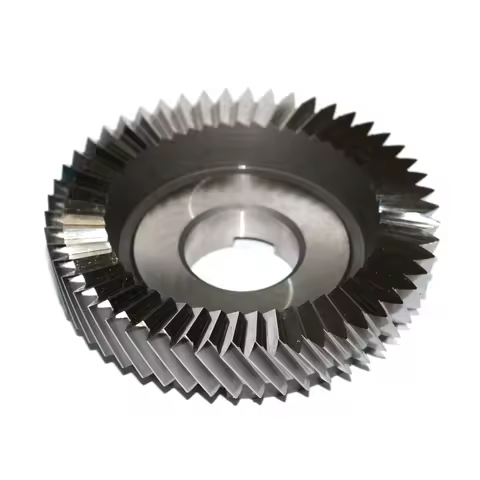
Gear shaping is one of the most versatile and accurate methods for producing gears, especially when dealing with internal teeth, close shoulders, or complex profiles. Among the most important tools in this process are the helical shaper cutter and the spiral shaper cutter—specialized instruments designed to generate smooth, high-precision gear forms that cannot be achieved easily through other methods.
As industries demand quieter transmissions, higher load capacity, and compact designs, the role of advanced gear shaping tools has become increasingly significant. Understanding how these cutters work and how to select them is essential for any manufacturer involved in gear production.
Why Gear Shaper Cutters Are Indispensable
Unlike hobbing, which requires clearance for the hob to pass through the workpiece, shaping uses a reciprocating cutter that mimics the mating gear. This makes shaping ideal for:
- Internal gears and splines
- Cluster gears with limited run-out space
- Gears close to flanges or shoulders
- Small batches requiring flexible tooling
The accuracy of this process depends largely on the quality of the cutter. A well-designed helical shaper cutter or spiral shaper cutter ensures correct involute geometry, proper lead, and excellent surface finish.
Understanding the Helical Shaper Cutter
A helical shaper cutter is specifically engineered to produce helical gears where the teeth are inclined at a helix angle rather than being straight. These gears are widely used because they provide:
- Smoother transmission of motion
- Lower noise levels
- Higher load-carrying capacity
- Better contact ratio
To generate this geometry, the cutter itself incorporates an equivalent helix angle and highly precise tooth form. Manufacturing such tools requires advanced grinding technology and strict inspection standards. Even minor deviations in the cutter lead can result in poor meshing and vibration in the final gear.
Modern helical shaper cutters are produced in various classes such as disc type, hub type, and shank type to suit different machines and applications. Materials like high-speed steel, powder metallurgy grades, and carbide are chosen based on workpiece hardness and production volume.
What Is a Spiral Shaper Cutter?
The spiral shaper cutter is a specialized version used mainly for cutting spiral or curved tooth forms, including certain types of bevel and pump gears. These cutters allow manufacturers to create complex profiles with high precision where conventional straight cutters cannot perform.
Key advantages of spiral shaper cutters include:
- Ability to generate curved tooth geometry
- Improved contact pattern in mating gears
- Reduced operational noise
- Higher efficiency in power transmission
Because these tools are application-specific, they are often produced according to customer drawings and gear data. Expertise from the tooling supplier plays a crucial role in achieving the desired results.
Design Features That Determine Performance
Whether it is a helical or spiral type, several technical factors influence the performance of a gear shaper cutter:
- Profile Accuracy – The involute form must match the mating gear exactly.
- Lead and Helix Precision – Essential for correct tooth alignment.
- Rake and Relief Angles – Affect cutting load and chip flow.
- Heat Treatment – Provides hardness and dimensional stability.
- Coating Technology – Enhances wear resistance and tool life.
Professional manufacturers such as those presented on sstools.net/gear-shaper-cutters/ focus on these parameters to deliver consistent, high-grade cutters.
Applications Across Industries
Helical shaper cutters and spiral shaper cutters are used in a wide range of sectors:
- Automotive: transmission gears, differential components, steering systems
- Aerospace: actuator and auxiliary gearbox gears
- Industrial gearboxes: internal ring gears and planetary sets
- Pumps and compressors: spiral and special tooth forms
- Agricultural machinery: durable, quiet drive systems
These industries rely on shaping when other processes cannot meet space or geometry requirements.
Selecting the Right Cutter for Your Job
Choosing between a helical shaper cutter and a spiral shaper cutter depends on several aspects:
- Type of gear: internal, external, or special profile
- Helix/spiral angle and module or DP
- Work material and hardness
- Required accuracy class
- Production quantity
Close cooperation with an experienced supplier helps translate gear drawings into the correct cutter design. Technical consultation prevents costly mistakes and ensures first-time success.
Maintenance and Re-Sharpening
Gear shaper cutters are precision tools that require proper care. Regular inspection for wear, chipping, and profile deviation is essential. Professional re-sharpening restores the cutting edges while maintaining the original geometry—significantly extending service life.
Using recommended cutting parameters, adequate coolant, and rigid fixturing further improves the performance of both helical and spiral shaper cutters.
Trends in Gear Shaping Technology
The shift toward electric vehicles and high-efficiency machinery has increased the need for silent and compact gear systems. This trend is driving innovation in shaper cutter design:
- Use of PM-HSS and carbide substrates
- Advanced PVD coatings for higher speeds
- Customized micro-geometry for noise reduction
- Digital inspection and traceability
Manufacturers that adopt these developments gain a competitive advantage in precision gear markets.
Partnering with a Specialized Tooling Provider
Because of their complexity, helical and spiral shaper cutters should be sourced from specialists with proven experience. A capable partner offers:
- Design support based on gear data
- Manufacturing to DIN/AGMA quality levels
- Custom cutters for unique applications
- Consistent delivery and after-sales service
Such collaboration ensures reliable production and optimal gear performance.
Conclusion
The helical shaper cutter and spiral shaper cutter play a vital role in producing gears that demand high accuracy, smooth running, and compact design. From internal ring gears to complex curved profiles, these tools enable solutions that other cutting methods cannot achieve.
By selecting well-engineered cutters and working with knowledgeable suppliers like those featured on sstools.net, manufacturers can enhance gear quality, reduce noise, and improve overall efficiency. As mechanical systems continue to evolve, precision gear shaping will remain an indispensable technology for the future of motion transmission.